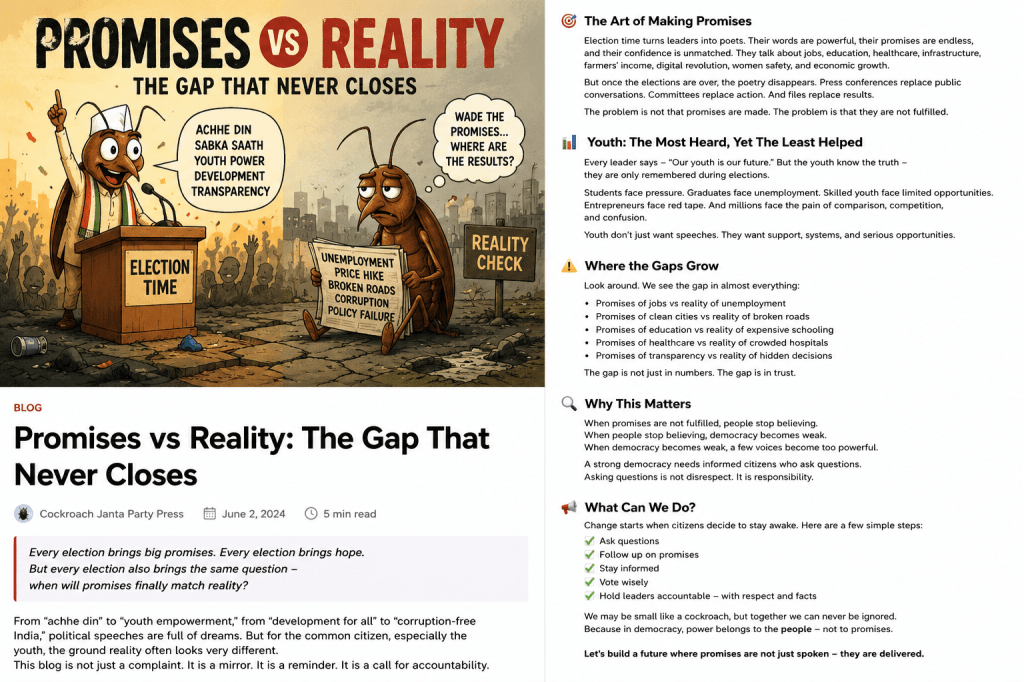
Every election brings big promises. Every election brings hope. But every election also brings the same question:
When will promises finally match reality?
From “achhe din” to youth empowerment, from development for all to corruption-free governance, political speeches are full of dreams. But for the common citizen, especially the youth, the ground reality often looks very different.
This blog is not just a complaint. It is a mirror. It is a reminder. It is a call for accountability.
The Art of Making Promises
Election time turns leaders into poets. Their words are powerful, their promises are endless, and their confidence is unmatched. They talk about jobs, education, healthcare, infrastructure, farmers’ income, digital revolution, women’s safety, and economic growth.
But once the elections are over, the poetry often disappears. Press conferences replace public conversations. Committees replace action. Files replace results.
The problem is not that promises are made. The problem is that they are not fulfilled.
Youth: The Most Heard, Yet the Least Helped
Every leader says, “Our youth is our future.”
But the youth know the truth — they are often remembered during elections and forgotten after results.
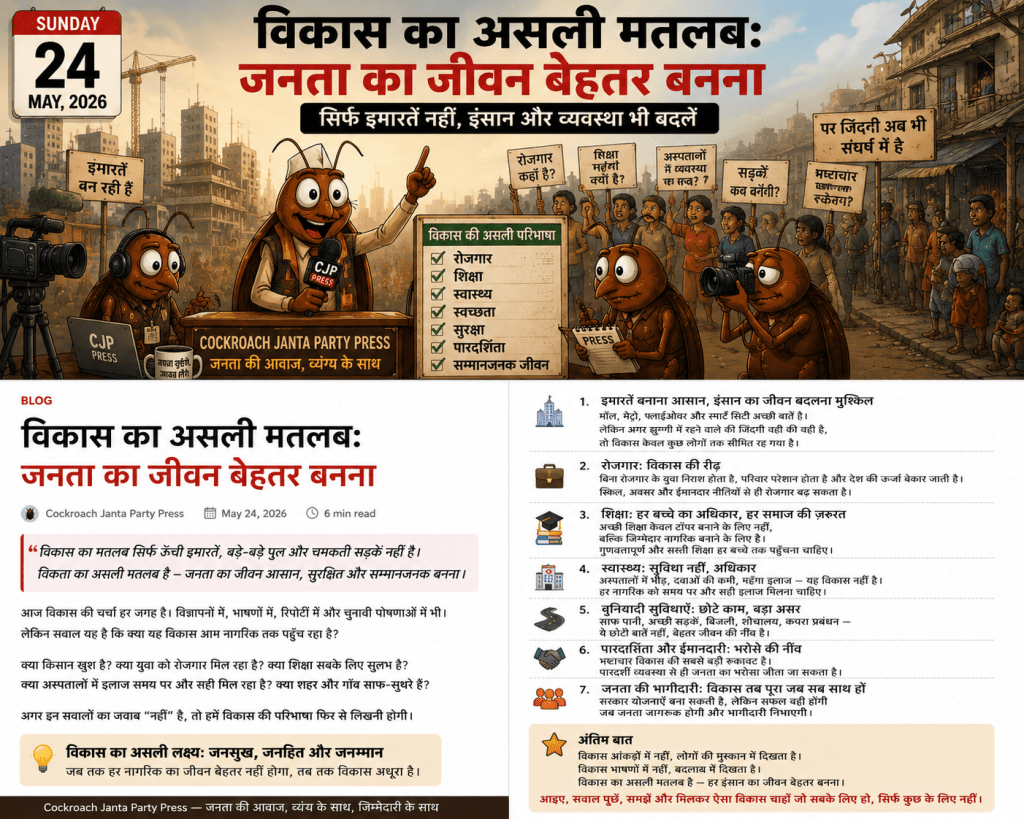
Students face pressure. Graduates face unemployment. Skilled youth face limited opportunities. Entrepreneurs face red tape. Millions face comparison, competition, confusion, and uncertainty.
Young people do not just want speeches. They want support, systems, and serious opportunities.
Where the Gaps Grow
Look around, and the gap is visible almost everywhere.
Promises of jobs meet the reality of unemployment.
Promises of clean cities meet the reality of broken roads and poor civic facilities.
Promises of affordable education meet the reality of rising fees.
Promises of healthcare meet the reality of crowded hospitals.
Promises of transparency meet the reality of hidden decisions.
The gap is not only in numbers. The gap is in trust.
Why This Matters
When promises are not fulfilled, people stop believing.
When people stop believing, democracy becomes weak.
When democracy becomes weak, a few voices become too powerful and the common citizen becomes silent.
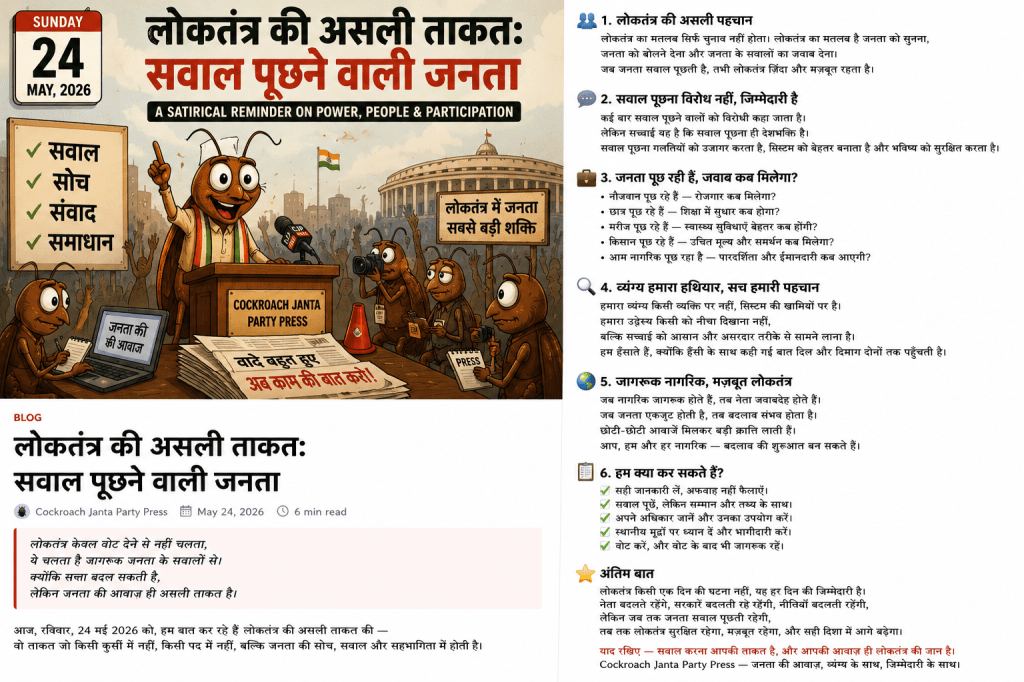
A strong democracy needs informed citizens who ask questions. Asking questions is not disrespect. It is responsibility.
What Can Citizens Do?
Change starts when citizens decide to stay awake.
Ask questions.
Follow up on promises.
Stay informed.
Vote wisely.
Hold leaders accountable with respect and facts.
Democracy is not a one-day event. It is not only about casting a vote. It is about continuous awareness, continuous questioning, and continuous participation.
The Cockroach Janta Party Press View
We may be small like a cockroach, but together we can never be ignored.
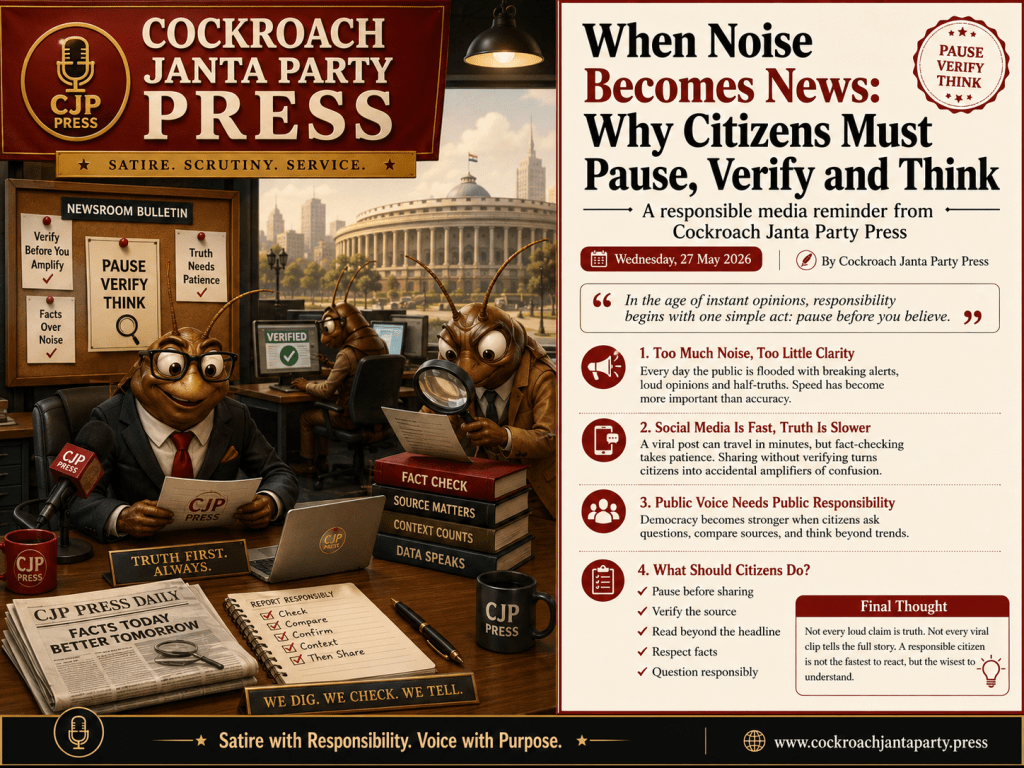
Cockroach Janta Party Press believes satire can make serious issues easier to understand. Humour can open conversations. A joke can carry a truth. A cartoon can ask what a press conference avoids.
This platform does not stand for hate. It stands for public voice.
It does not attack democracy. It strengthens democracy by reminding citizens that power belongs to the people — not to promises.
Final Thought
Promises should not be seasonal. Development should not be a slogan. Youth should not be used only as a crowd. Citizens should not be remembered only during elections.
The gap between promises and reality will close only when people refuse to forget.
Let’s build a future where promises are not just spoken — they are delivered.



Leave a comment